Our Story

Senda Loto

Where the tranquility of nature inspires inner transformation

About Us

Our Story

Our story began with a simple wish: to live a peaceful life in harmony with nature.

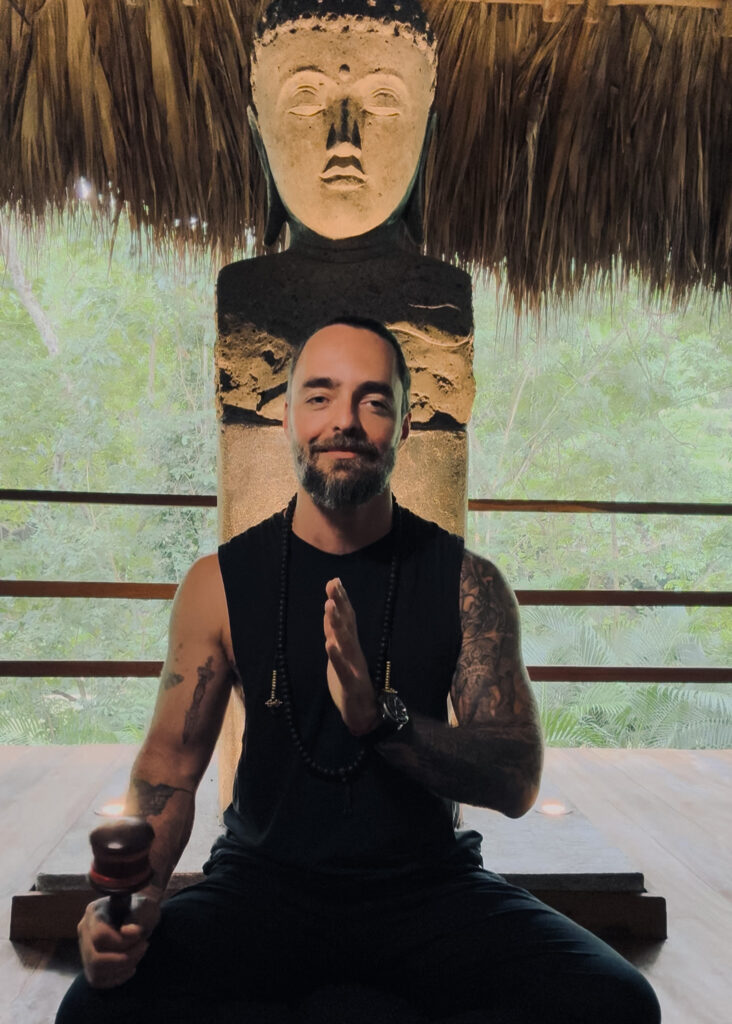
Before opening his first retreat center, our founder, Pema, spent years living and training in Buddhist temples, immersing himself in the ancient traditions of Meditation, Martial Arts, and Yoga. While these practices became his foundation, he never planned to teach; his only goal was to live the truth he had discovered through a life-changing realization and years of dedicated practice.

When arriving in Colombia, he dreamed of a quiet, yogic life in the jungle. But life had other plans. A sudden, near-death experience brought him to a hospital in Medellín. In the silence of his recovery, he turned to his years of training for the strength to heal.

Noticing the peace and resilience he carried, other patients and visitors began to ask him for guidance, seeking the same stillness they saw in him. Pema reached out to his own teacher to ask if he should fulfill these requests. His teacher not only encouraged him to teach but asked him to dedicate his life to this path.

What started as a personal recovery in a hospital ward soon grew into a shared mission. In 2016, he opened La Casa de Loto, and Senda Loto in 2025—sanctuaries where the ancient training of the temples meets the practical needs of the modern seeker.

El Fundador

Pema es un experimentado guía de meditación y yogui con más de 15 años de práctica dedicada en el budismo tibetano, especialmente en la tradición Dzogchen. Ha estudiado y se ha formado con algunos de los maestros más respetados de nuestro tiempo, como S.S. el Dalai Lama, Dzongsar Khyentse, Dzogchen Ponlop y su maestro raíz, el gran yogui Loppon Jigme Rinpoche.

Perder a sus padres en la infancia le dejó una profunda huella. Ese dolor desencadenó una búsqueda de sentido que duró toda la vida. La música se convirtió en su primer refugio, lo que le permitió desarrollar una carrera exitosa; pero incluso en la cima del éxito, algo faltaba. El silencio bajo el ruido seguía creciendo, hasta que lo arrastró a una oscuridad de la que ya no podía escapar.

En su punto más bajo, cuando consideró quitarse la vida, vio una simple verdad: que todos los pensamientos y emociones son meras proyecciones de la mente sin esencia, vacías de sustancia. Así que se desprendió. De la carrera. De la persecución. De todo lo que creía ser. Se alejó de la vida que conocía y partió en solitario: recorrió países, realizó largos retiros y se adentró en lo desconocido. Se formó con yoguis apasionados y maestros budistas, enfrentándose a sí mismo una y otra vez en silencio y soledad.

Hoy, las enseñanzas de Pema son crudas, reales y arraigadas en la experiencia vivida. Sin rodeos. Sin representaciones espirituales. Solo la perspectiva práctica de alguien que ha estado al límite y ha encontrado la salida.

Philosophy

Becoming real is perhaps the most important—and most overlooked—part of the spiritual path. It’s not about becoming something more. It’s about shedding what isn’t true. The masks, the roles, the polished identities we’ve spent a lifetime building. And the hardest part? Realizing that even our spiritual path can become just another mask.

Materialism in its usual form is easy to recognize. The endless chase for possessions, comfort, status, validation. We grasp outwardly, hoping something “out there” will make us feel complete. But this grasping disconnects us. From others, from our deeper self, from the moment right in front of us. We begin to live on the surface of life—busy, consumed, and subtly afraid to slow down and feel what’s underneath.

Then we step onto a spiritual path, hoping for something more real. But without awareness, the same grasping follows us. Only now it’s cloaked in spiritual language and practice. We chase insights instead of income, status as a “wise” or “awakened” person instead of worldly success. We might meditate, do yoga, study teachings—all good things—but with the quiet hope they’ll elevate us above others, or shield us from discomfort.

This is spiritual materialism: when spirituality becomes another way to strengthen the ego. And like regular materialism, it too creates distance. We may feel “above” others who haven’t “woken up.” We may hide our pain behind teachings or pretend we’ve transcended things we’re still deeply tangled in. We disconnect—from our vulnerability, from honest connection, from the humility that makes love possible.

True spirituality reconnects us. And this is where vipassana—insight meditation—plays a vital role. By gently observing our experience, vipassana reveals the habitual patterns of grasping and clinging that keep us trapped in illusion. It shows us the masks moment by moment, with compassion and clarity, helping us to let go—not by force, but by natural recognition.

It breaks us open, not to make us better than others, but to make us real. It asks us to stop performing—for approval, for success, for spiritual validation—and just be here, fully. Present, flawed, awake to our own contradictions. Willing to feel. Willing to not know. Willing to let the ego die a little, again and again.

When we let go of the need to be someone—whether that someone is wealthy or enlightened—we begin to return to life, simplicity, kindness, quiet presence. And in that space, something sacred happens: we reconnect. With ourselves. With others. With the world as it is.

And that’s the beginning of freedom—not in becoming more, but in becoming real.

en_USEnglish